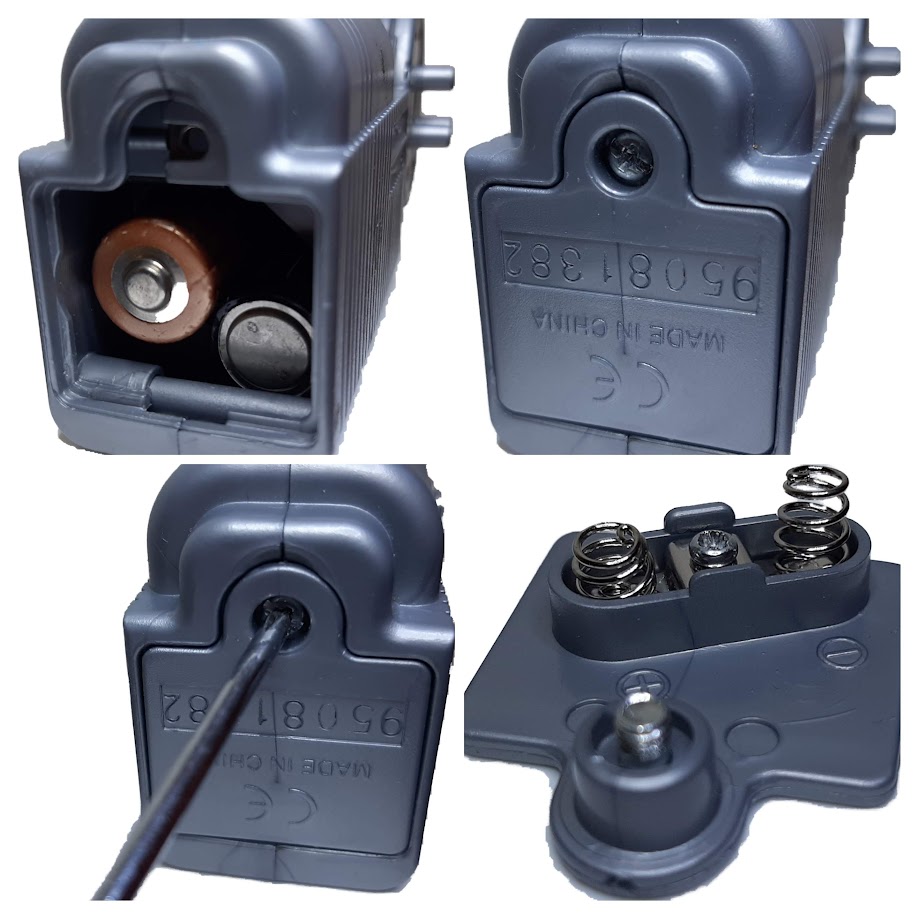

A K’NEX motor that does not run is not necessarily broken. The cause may be as simple as incorrectly installed batteries, but it can also be found elsewhere in the model: a tight axle, misaligned gears, a twisted chain or an incomplete power system.
Always read the original manual first and follow its instructions.
K’NEX motors differ in battery arrangement, voltage, speed, connections and controls. Never apply the instructions for one motor automatically to another.
First Identify the Power System
Before troubleshooting, determine what kind of power unit you have.
K’NEX has used several systems, including:
- battery motors with an integrated battery compartment;
- motors connected to a separate battery holder;
- externally powered 12V motors;
- solar motors;
- motors with a separate controller;
- motorised coaster launchers and boosters;
- spring, flywheel and pull-back mechanisms;
- specialised air-powered systems.
Not all of these are electric motors. A spring motor, pull-back motor or air-powered component requires a different diagnostic approach.
For an overview, see K’NEX Motors & Power.
Stop if You Find a Safety Problem
Do not continue testing when the motor or power system has:
- exposed or damaged wiring;
- a cracked electrical housing;
- serious battery corrosion;
- a missing or damaged battery cover;
- an unidentified mains adapter;
- signs of overheating;
- smoke or a burnt smell;
- liquid inside the housing.
Remove the batteries or disconnect the power supply.
Original K’NEX electric-toy instructions tell users to examine motor components regularly for damaged parts or possible overheating.
View the original K’NEX 6-Foot Ferris Wheel manual 89774 (PDF)
The linked file is an original K’NEX manufacturer manual preserved by an external archive.
Is the Motor Completely Silent?
When a battery motor produces no sound or movement, begin with the power supply.
Check:
- whether the switch is in the correct position;
- whether batteries are installed;
- whether the correct battery type is being used;
- whether every battery follows the polarity diagram;
- whether the batteries are fresh;
- whether the battery cover is fitted correctly;
- whether the electrical contacts are visibly clean and intact;
- whether a separate battery holder is properly connected.
Do not assume that batteries are usable merely because they worked recently in another device. Replace the complete set with fresh, matching batteries of the type specified in the manual.
Official K’NEX instructions warn against mixing old and new batteries or different battery types.
View the official Basic Fun K’NEX Motorized Models manual 85043 (PDF)
Check the Battery Contacts
Open the battery compartment only in the manner shown in the original instructions.
Look for:
- batteries installed in the wrong direction;
- contacts that are bent away from the battery;
- white, green, blue or brown deposits;
- rust;
- damaged springs;
- residue from battery leakage;
- broken or loose wires.
Do not allow children to touch leaking batteries or unidentified residue. Follow the battery manufacturer’s safety instructions and local disposal requirements.
Removing visible residue does not prove that the battery holder is undamaged. Corrosion can interrupt the electrical connection or extend into wiring and internal components.
Does the Motor Hum Without Turning?
A humming or buzzing sound can indicate that power is reaching the motor but the output is being prevented from moving.
Switch the motor off immediately and inspect the model.
Check whether:
- an axle is trapped;
- gears are pressed too tightly together;
- a gear rubs against a connector;
- spacers leave too little movement;
- a chain is twisted or excessively tight;
- a wheel or pulley rubs against the frame;
- a rod has entered an opening where it does not belong;
- the structure has moved out of alignment.
Do not leave a stalled motor switched on. A motor that cannot turn may become hot.
Test the Mechanism by Hand
Before applying motor power, turn the mechanism gently by hand where the construction and original instructions allow this.
A well-aligned mechanism should move without excessive resistance.
Check that:
- axles remain straight and supported;
- gears engage without being forced together;
- chains stay on their intended path;
- wheels rotate as intended;
- moving parts have sufficient clearance;
- rods and connectors do not obstruct the drive;
- wires remain away from moving components.
Official K’NEX instructions warn users to keep hands, face, hair and clothing away from moving parts. Switch the motor off before touching or adjusting the mechanism.
View the original K’NEX Corkscrew Coaster manual 12434 (PDF)
Does the Motor Turn Without Moving the Model?
When the motor runs but the model remains stationary, the problem is usually between the motor output and the moving section.
Inspect:
- the output shaft;
- the first gear or pulley;
- axle locks and clips;
- missing spacers;
- loose gears;
- disconnected chain links;
- slipping belts or elastic loops;
- parts installed in the wrong orientation.
A wheel or gear may rotate freely around an axle when the design requires it to turn with the axle. Conversely, a component may have been locked when it needs to rotate freely.
Compare the construction with the original instructions instead of adding extra clips or forcing the mechanism.
Does the Motor Run Slowly?
A motor may run slowly because of the power supply, the mechanism or the motor itself.
Test one possibility at a time:
- Install the correct fresh batteries.
- Check all battery contacts.
- Reduce unnecessary resistance in the mechanism.
- Inspect gear alignment and spacing.
- Check whether the chain is too tight.
- Confirm that the model uses the intended motor and gearing.
- Compare the construction with the original instructions.
Different K’NEX motors were designed with different output speeds. A slowly rotating motor is not automatically defective.
K’NEXCHANGE records examples ranging from relatively slow motors for controlled movement to high-speed motors for faster applications. Identification is therefore important before judging performance.
Is the Operation Intermittent?
A motor that starts and stops unexpectedly may have:
- weak batteries;
- poor contact inside the battery compartment;
- corrosion;
- a loose wire;
- a damaged switch;
- an intermittent plug or cable;
- a mechanism that binds at one point in its cycle.
Turn the model slowly by hand through a complete cycle. A rotating mechanism may move freely in one position but jam later because of a misaligned gear, bent structure or uneven chain.
If moving a wire or plug causes the motor to start and stop, discontinue use until the electrical component has been assessed.
Check Motors with a Separate Battery Holder
Some K’NEX motors form only one part of a complete system.
A loose motor may originally have required:
- a separate battery box;
- a particular connecting lead;
- a switch;
- a controller;
- an adapter;
- a dedicated shaft or drive component.
Check both the motor and the external power component. A working motor cannot operate when its separate battery holder, lead or controller is missing or incompatible.
Do not connect unfamiliar wires simply because the plugs appear similar.
Be Especially Careful with 12V Systems
K’NEX produced an externally powered 12V motor system. It should not be treated as an ordinary battery motor.
Use only the correct, identified power supply specified for the system. Do not experiment with an unidentified mains adapter or assume that matching connector dimensions prove electrical compatibility.
Do not open or repair a mains adapter. Replace damaged mains equipment with the correct safe component.
If the motor, adapter or specification cannot be identified confidently, do not connect it to the mains supply.
Troubleshooting a Solar Motor
A solar motor requires sufficient light and the correct complete solar system.
Check:
- whether the solar panel belongs to the motor;
- whether the connecting lead is complete;
- whether the panel surface is clean;
- whether the panel is receiving sufficiently strong light;
- whether the motor shaft can move;
- whether the model creates excessive resistance.
Indoor light may not produce the same result as strong daylight. Test the uncomplicated motor system before asking it to drive a large model.
Do not substitute an unrelated electrical power supply for the solar panel unless original documentation specifically permits it.
Is the Motor Actually the Problem?
A model that does not move can have five different types of fault:
Power: Batteries, battery holder, adapter or solar panel.
Motor: Internal motor or gearbox.
Transmission: Shaft, gears, chain, pulley or belt.
Structure: Alignment, spacing and support.
Load: Excessive weight, friction or resistance.
Separating these areas prevents unnecessary motor replacement.
If the motor turns normally when disconnected from the mechanism—and the original instructions allow it to be tested that way—the fault is more likely to be in the transmission, structure or load.
Change One Thing at a Time
Do not replace batteries, alter the gears, shorten the chain and rebuild the supports simultaneously.
Make one change and test again.
This simple method shows which adjustment affected the result and prevents a new problem from hiding the original one.
Record useful observations such as:
- completely silent;
- humming but not turning;
- turns without load;
- stops at one point;
- runs slowly;
- works when a cable is moved;
- becomes unusually warm.
These details are more useful than saying only that the motor “does not work”.
Do Not Force or Open the Motor Prematurely
Opening a motor housing can damage clips, wiring, gears or alignment. Some housings were not designed for routine user servicing.
Complete the external checks first:
- correct power source;
- fresh batteries;
- correct polarity;
- clean visible contacts;
- intact wires and plugs;
- free-moving output;
- correctly assembled mechanism;
- appropriate load.
Internal work should be undertaken only by someone with suitable knowledge and with the power source completely disconnected.
A dismantled motor offered for parts should be clearly identified as incomplete or non-working.
Sources
Basic Fun!, K’NEX Motorized Models Building Set 85043, instruction manual.
The official manual covers battery installation, polarity, battery types, long-term battery removal, keeping components free of dust and avoiding immersion in water.
View the original Basic Fun K’NEX manual (PDF)
K’NEX, Amusement Park Corkscrew Coaster 12434, instruction manual.
The manual contains battery and moving-parts warnings, instructs users to read the safety information and states that components should not be immersed or used in water.
View the original K’NEX Corkscrew Coaster manual (PDF)
K’NEX Limited Partnership Group, 6-Foot Ferris Wheel 89774, instruction manual.
The original electric-toy instructions tell users to inspect motor components regularly for damage and possible overheating.
View the original K’NEX 6-Foot Ferris Wheel manual (PDF)
The Ferris Wheel manual is an original manufacturer document preserved by an external archive. Instructions and specifications in each source apply to the product shown. Always consult the manual for the particular K’NEX motor or set.
Leave a Reply