Looking for a specific series? Use your browser’s Find function to search this page: Ctrl+F on Windows or Command+F on Mac.
K’NEX has appeared in many different series and product lines. Some bring together sets with a shared building concept or subject. Others are defined by specialised parts, technology, characters, educational aims or a licensed property.
Knowing the series can help you understand how products are related. However, a K’NEX product can be described in several ways. Its building system, series, theme, licence, set and model do not all mean the same thing.
This page starts with these basic differences. It then explores different kinds of K’NEX product lines and explains how series information can help identify sets and specialised parts.
Series, themes, sets and models
A series or product line brings together related products. The relationship may be based on a shared concept, technology, style, intended audience, group of specialised parts or licensed property.
A theme describes what a set or model is about. Roller coasters, amusement parks, vehicles, dinosaurs, robots and buildings can all be themes.
A set is an individual K’NEX product, usually identified by a set number and supplied with a particular collection of parts and building instructions.
A model is the construction itself. One set may provide instructions for one main model, several alternative models or many smaller constructions.
These distinctions are useful even for beginners. A roller coaster is a type of model, but not every K’NEX roller coaster belongs to the same series. A famous building can be constructed from a general building set without making that set part of the Architecture product line.
Systems are not series
Classic, Micro and Kid K’NEX are building systems rather than product series.
A system describes the scale and type of components used to construct a model. Classic K’NEX uses the standard-size rods and connectors, Micro K’NEX uses smaller components, and Kid K’NEX uses much larger components intended especially for younger builders.
A series can use one building system or, in some cases, combine components from different systems.
This means that hundreds of unrelated sets can all use Classic K’NEX without belonging to the same series. Conversely, related products may use different components or combine Classic and Micro K’NEX.
A useful first distinction is therefore:
system = what type of K’NEX parts are used
series = which group of related products the set belongs to
General building sets
Many K’NEX products were designed as general-purpose building sets rather than around a character, licence or specialised theme.
Their names often describe the number of models, the type of container or the way the parts can be used. Examples include names containing 10 Model, 20 Model, 30 Model, 35 Model, 50 Model, 70 Model or 100 Model, as well as descriptions such as Building Set, Building Chest, Tub, Value, Big Value and Super Value.
These descriptions are useful, but they should not automatically be treated as series names.
Two products can both provide instructions for 50 models while belonging to different product families, periods or packaging concepts. Similarly, the word tub describes the packaging but does not necessarily identify one specific series.
The number of models, packaging type and product designation are therefore useful characteristics in their own right.
Series based on a building subject
Some product lines are organised around a recognisable type of model or construction.
Thrill Rides
Large moving attractions have played an important role in K’NEX.
The name Thrill Rides has been used for products including roller coasters and other amusement-ride constructions. These models can combine large supporting structures with motors, gears, chains, coaster cars and specialised track.
Roller coasters are also a much broader K’NEX theme. K’NEX produced coaster and amusement-ride sets over many years. An older coaster should therefore not automatically be classified as part of a later Thrill Rides product line simply because it is a roller coaster.
The set number, packaging, instructions and contemporary product information provide better evidence for identifying the product line.
Architecture
K’NEX has released a distinct Architecture product line featuring models of well-known structures.
This should not be confused with architecture as a general subject. Builders have been able to construct buildings and famous structures from many general-purpose K’NEX sets.
A model of the Eiffel Tower, for example, can appear as one of several models in a general building set without making that product part of the K’NEX Architecture line.
The product can belong to the Architecture series; architecture can also simply describe the subject of a model.
Hyperspace
Hyperspace is a space-themed K’NEX product line.
The series identity brings together products based around a shared science-fiction setting and related constructions. This distinguishes Hyperspace from space models that may be built from unrelated K’NEX sets.
A spacecraft, space station or futuristic vehicle should therefore not be classified as Hyperspace solely because of its subject. The original product name, packaging and instructions remain important evidence.
Series based on specialised parts or functions
Some K’NEX product lines can be recognised not only by their names or subjects, but also by distinctive components.
Alive
K’NEX Alive brought fantasy creatures and monsters into the construction system.
Models included creatures such as Charging Bull, Clawing Chimera, Slashing Griffin, Roaring Basilisk and other imaginary or animal-like constructions.
Alive sets use specialised creature components alongside more familiar K’NEX construction parts. Heads, jaws, limbs, tails, claws and other shaped components give the models an appearance and function that would be difficult to create using rods and connectors alone.
These specialised components can also provide useful clues when identifying an incomplete or unknown set.
Beasts Alive
Beasts Alive is another identifiable creature-based K’NEX product line.
Sets include Bronto, Chompster, Tri-Stego and Stompz.
Alive and Beasts Alive are kept separate when identifying sets. Their names and concepts are related, but similarity alone is not sufficient reason to treat two differently named product lines as the same series or as different generations of one series.
ReKonstructors
ReKonstructors is a distinct K’NEX product line featuring buildable characters and creatures.
The models use recognisable shaped components in combination with K’NEX construction parts. Their specialised forms and recurring presentation help distinguish the product line from general creature, robot or figure models.
ReKonstructors is kept separate from Konstructors. Similarity between the two names does not by itself establish that they are the same series or that one is a continuation of the other.
Only products supported by reliable set information should be classified as ReKonstructors.
Moto-Bots
Moto-Bots used motorised creature-like or robot-like models as a shared concept.
Examples include Chomp Bot, Razor Bot, Spider Bot and Turbo Bot.
The repeated naming, motorised functions and related model concept help distinguish Moto-Bots from the broader robot theme. Many K’NEX robots can exist without belonging to the Moto-Bots product line.
K-Force
K-Force combined K’NEX construction with working blaster-style models.
The line introduced specialised components for functions such as grips, triggers, bodies and projectiles. These parts were combined with K’NEX construction components to create models with a particular mechanical purpose.
K-Force can often be recognised not only from the product name, but also from its distinctive specialised parts.
Cyber X
Cyber X is a K’NEX product line based around buildable foam-dart blasters.
The sets combine K’NEX construction parts with specialised components used to launch darts. Some models also use motorised mechanisms. Different products provide instructions for one or more blaster constructions.
Cyber X is recorded separately from both K-Force and Cyber K’NEX. K-Force is another blaster-oriented line, while Cyber K’NEX is associated with electronic and programmable construction.
Shared functions or similar names can help suggest a possible relationship, but they do not make separately identified product lines interchangeable.
Series based on technology
Technology can also provide the shared identity of a product line.
Cyber K’NEX
Cyber K’NEX extended construction into electronic and programmable models.
Rather than changing only the appearance of a K’NEX model, Cyber K’NEX added components that could control movement and other functions.
Cyber K’NEX is therefore more than a general robot or technology theme. Its specialised electronic and control components form an important part of the identity of the product line.
Despite the similarity in their names, Cyber K’NEX and Cyber X are kept separate. Cyber X is based around buildable dart blasters and should not be merged with Cyber K’NEX without specific evidence.
Series based on presentation or intended audience
Not every series is defined by one kind of model or one specialised mechanism. A shared presentation, intended audience or creative approach can also connect a group of products.
Mighty Makers
Mighty Makers brought together themed building sets with recurring presentation and characters.
Sets include subjects such as engineering, travel, design and imaginative construction.
Mighty Makers demonstrates that a series does not have to be defined by one particular type of model. Its common identity can instead come from the intended audience, presentation and overall concept of the products.
Licensed K’NEX products
K’NEX has worked with a variety of licensed characters, games, television properties, vehicles and other brands.
Examples include MechWarrior, Super Mario and Mario Kart, Sesame Street, Angry Birds, Plants vs. Zombies, PAC-MAN, Titanfall and Top Gear.
A licence and a series are not necessarily the same thing.
A licensed property can contain several product lines, collections or generations of sets. Mario products, for example, appeared in different Super Mario and Mario Kart groups. MechWarrior products show how different numbered series can exist within one licensed property.
For accurate classification, it is therefore useful to record the licensed property separately from the series or collection.
Sesame Street and Kid K’NEX
Licensed products can also belong to a particular K’NEX building system.
Sesame Street K’NEX products use the Kid K’NEX system, combining the larger components intended for younger builders with Sesame Street characters and settings.
Within a licensed property there can also be smaller collections. Where original packaging or other reliable documentation identifies such a collection, it can be recorded separately from the Sesame Street licence itself.
This gives one product several useful levels of identification:
Kid K’NEX → Sesame Street → collection or series → individual set
Mario and Mario Kart
The Mario licence demonstrates how extensive a licensed K’NEX family can become.
K’NEX produced sets associated with Super Mario and several Mario Kart games. These products introduced specialised figures, karts, track components and other game-related parts alongside more general K’NEX components.
Classifying every product only as Mario would lose useful information. The licensed property, particular Super Mario or Mario Kart product line and individual set can all be recorded separately.
MechWarrior
MechWarrior provides another example of classification within a licence.
K’NEX produced multiple BattleMech construction sets, and the products were organised into different series.
A product can therefore simultaneously be identified as a K’NEX construction set, a MechWarrior licensed product, a member of a particular MechWarrior series and an individual BattleMech model.
This is one reason why a single field called theme or series is not enough to describe every K’NEX product accurately.
K’NEX Education
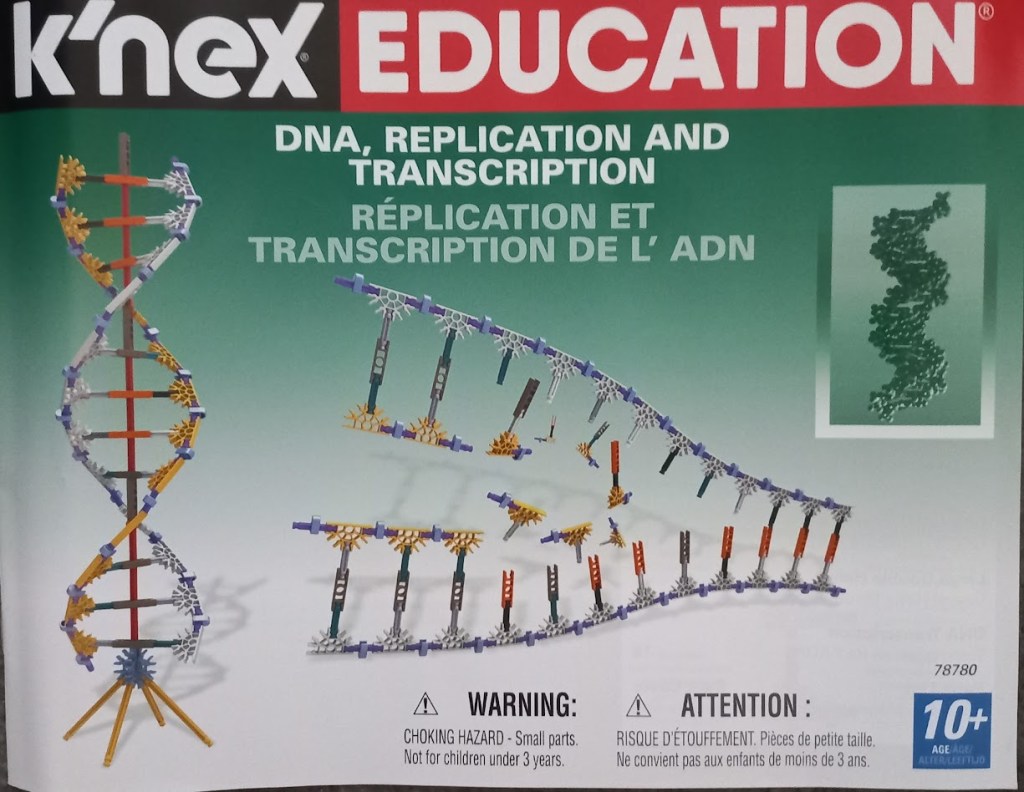
K’NEX Education is a broad educational range rather than one ordinary consumer series.
Education products were developed for schools and other learning environments. Depending on the product, they can include building instructions, experiments, investigations, challenges and teacher materials.
Subjects include structures, simple machines, gears, levers, pulleys, forces, motion, energy, mathematics and other areas of science and technology.
Within this broader educational range, several specifically named product lines can be distinguished.
STEM Explorations
STEM describes Science, Technology, Engineering and Mathematics. It is an educational field or approach, not automatically the name of a K’NEX series.
STEM Explorations, however, is a named K’NEX Education product line. It includes products dealing with subjects and applications such as gears, levers and pulleys, vehicles, roller coasters and swing rides.
This gives a useful hierarchy:
K’NEX Education → STEM Explorations → subject → individual set
Other Education products do not need to be classified as STEM Explorations simply because they are useful for STEM learning. STEM Explorations remains a specific product line within the broader Education and STEM classifications.
Maker Kit
Maker Kit is a named group within K’NEX Education.
Maker Kits provide collections of components intended for designing, constructing, testing and adapting models. Their open-ended character supports creative building and engineering activities rather than concentrating only on one display model.
Maker Kit remains a specific product-line entry within the broader Education classification. A general collection of K’NEX parts should not automatically be classified as a Maker Kit unless the original product information uses that name.
Introduction to Simple Machines
Introduction to Simple Machines is a K’NEX Education product line organised around fundamental mechanical principles.
Products can focus on subjects such as gears, levers and pulleys, wheels and axles or inclined planes. Models and educational activities allow learners to investigate how these mechanisms affect movement, direction, speed or force.
The line belongs within the broader K’NEX Education classification, but its name provides a more specific relationship between its products.
This gives another useful hierarchy:
K’NEX Education → Introduction to Simple Machines → mechanical subject → individual set
Series and specialised parts
Product lines are important not only for organising sets. They can also help identify individual parts.
Alive creatures, ReKonstructors, Cyber X, K-Force, Mario Kart sets and other specialised products introduced components that are uncommon outside their particular applications.
An unidentified specialised part may therefore provide evidence about the product line from which it originated.
The relationship also works in the other direction. Once a set has been identified, its instructions and inventory can help determine the correct identity, colour and function of unusual parts.
This creates two useful routes:
part → set → series
and:
series → set → part
Common rods and connectors usually provide less specific evidence because they appear in many different products. A distinctive figure component, motor, electronic unit, blaster part, coaster car or specialised panel can narrow the possibilities much more quickly.
Identifying a product line
When trying to determine whether a set belongs to a particular series or product line, begin with the product itself rather than its general appearance.
Useful evidence includes:
- Set number and exact product name
- Original packaging
- Building instructions
- Contemporary K’NEX catalogues and documentation
- Logos or series names printed with the product
- Specialised parts associated with the product line
- Reliable inventories and historical references
A shared subject alone is weaker evidence. Two roller coasters can belong to different product lines, just as two dinosaur, robot or blaster models can come from completely different K’NEX series.
If the evidence supports only a broad theme, it is better to record that theme than to assign an unverified series.
A changing product history
K’NEX has developed over many years. New building concepts, technologies, educational products and licensed properties appeared at different times.
As a result, there is no single historical classification in which every K’NEX set fits neatly into one series.
A detailed description may require several pieces of information:
System → Market or purpose → Series or product line → Theme or subject → Licensed property → Set → Model
Not every product needs every level. A general building set may have no licence or clearly named series, while a specialised licensed product may require several levels to describe it accurately.
Keeping these characteristics separate makes it possible to describe both simple general-purpose sets and highly specialised licensed or educational products without forcing them into the same classification.
It also allows the catalogue to grow as more historical documentation, sets and parts are identified.
 K'NEXCHANGE