Updated through August 2026.
K’NEX has used many different ways to power models. Electric motors are the most familiar, but K’NEX also produced spring, flywheel, pull-back, solar, launcher and other specialised power systems.
The systems are not interchangeable simply because they are all described as motors or power units. They can differ in power source, speed, battery arrangement, connection, output shaft and intended application.
This page provides an overview of the main K’NEX motor and power systems and helps identify complete units as well as their associated parts.
Battery motors
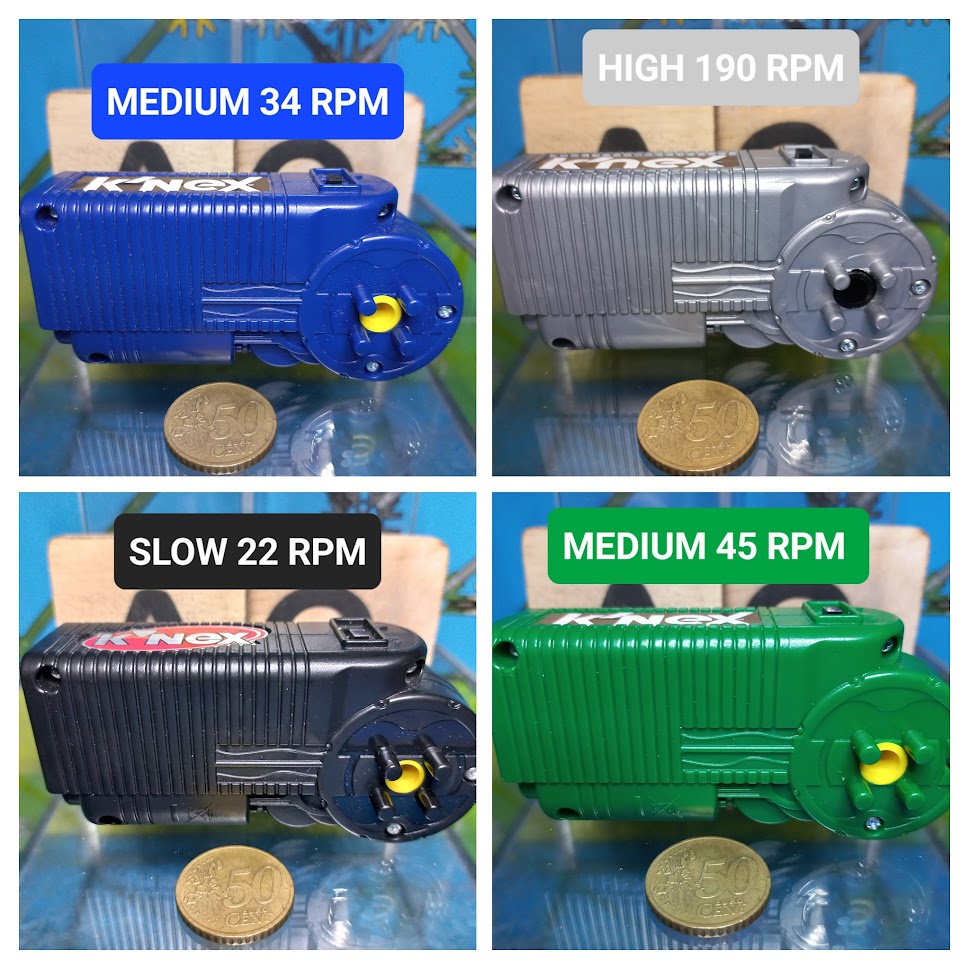
Several generations of K’NEX motors carry their batteries in or directly on the motor unit.
They include motors with different speeds and housing designs, from relatively slow motors intended for controlled movement to high-speed motors used where considerably faster rotation is required.
Examples include:
- 92401 — early two-speed battery motor
- 23891 — slow motor, approximately 22 rpm
- 92840 — medium-speed motor, approximately 34 rpm
- 22722 — medium-speed motor, approximately 45 rpm
- 20861 / 2971001 — high-speed motors, approximately 190 rpm
Speed is important when identifying a motor. Motors with a similar purpose are not necessarily equivalent when their rotational speeds differ.
Motors with a separate battery box
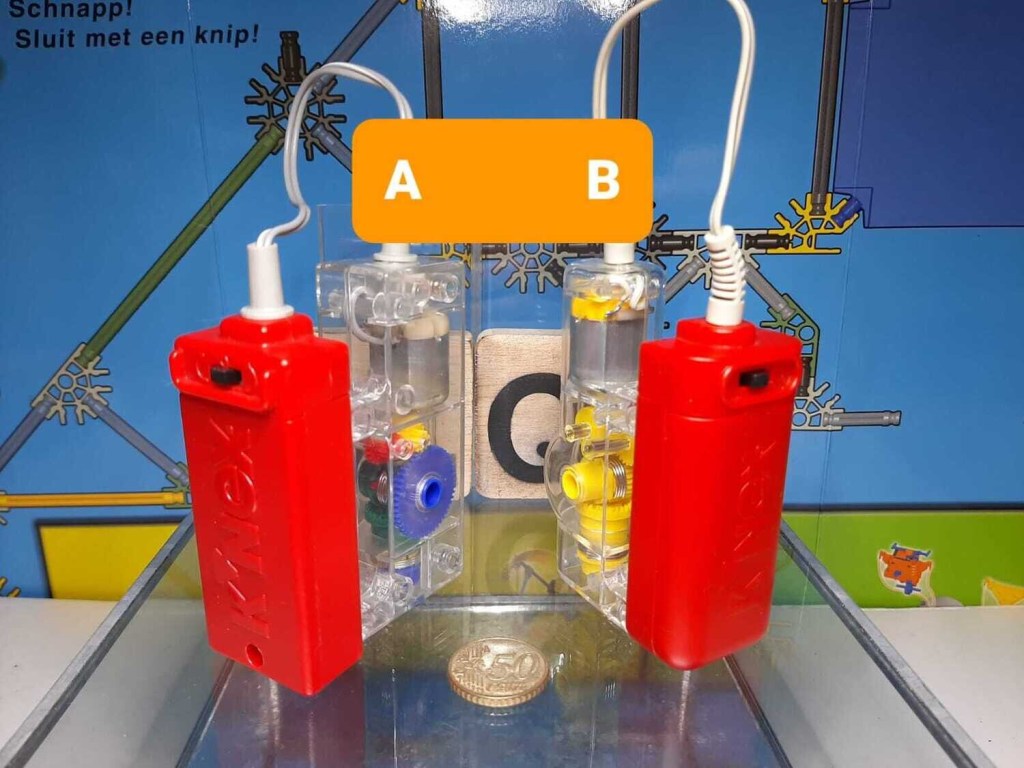
Some K’NEX electric motors use a separate battery holder connected by a lead instead of carrying the batteries directly in the motor housing.
Both short-lead and long-lead/tethered arrangements exist, as well as later systems in which the motor and battery box are clearly separate components.
When identifying one of these systems, the motor, lead and battery holder should therefore be considered together.
A loose motor without its original battery box may represent only part of the complete power system.
12V mains power
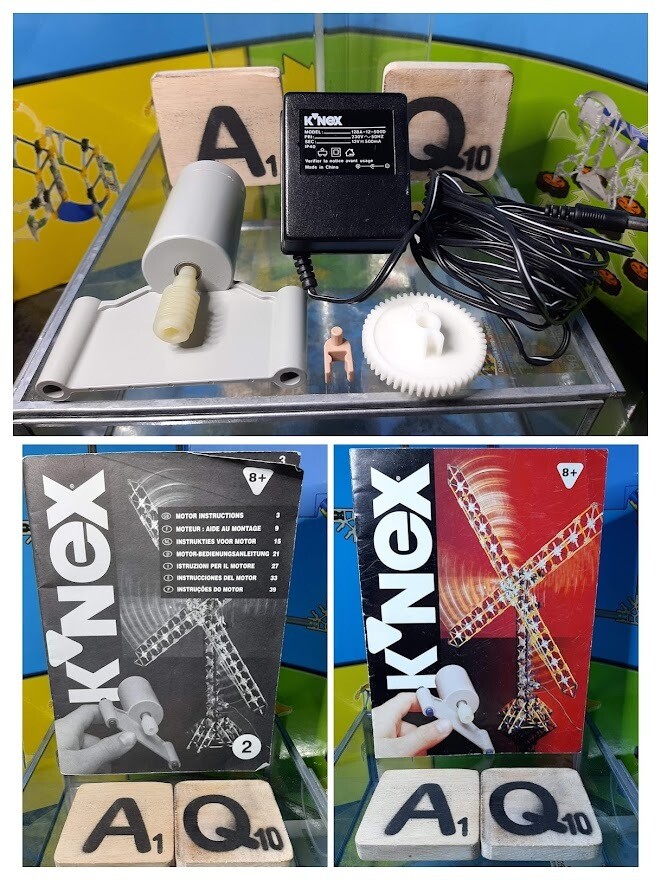
K’NEX also produced a 12V externally powered motor system.
This system uses a separate mains adapter rather than batteries and includes the motor, power connection and associated drive components.
The 12V system should not be confused with a battery motor simply because both can have an electrical lead. Their power sources and associated components are different.
Solar power
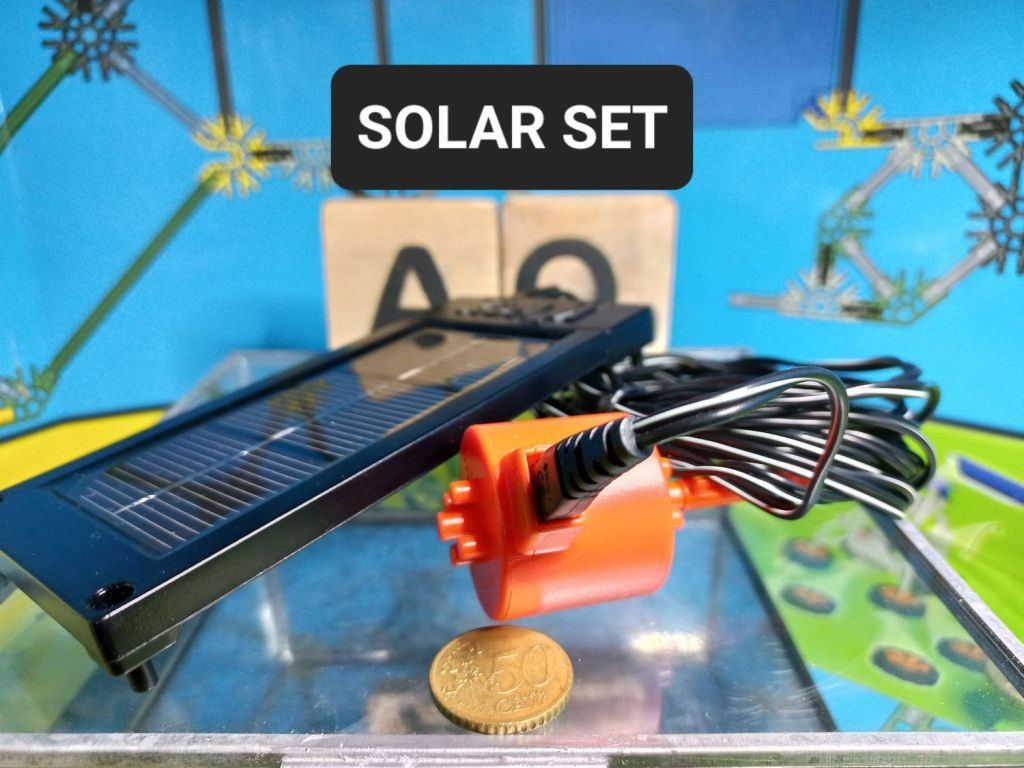
Solar K’NEX uses a solar panel to provide electrical power to a dedicated motor.
The system can include:
- solar panel;
- motor;
- connecting lead;
- motor shaft;
- associated mounting or drive parts.
Some of these components also occur separately. A solar motor found without its shaft or panel may therefore be an incomplete part of a larger solar power system.
Brick K’NEX motors
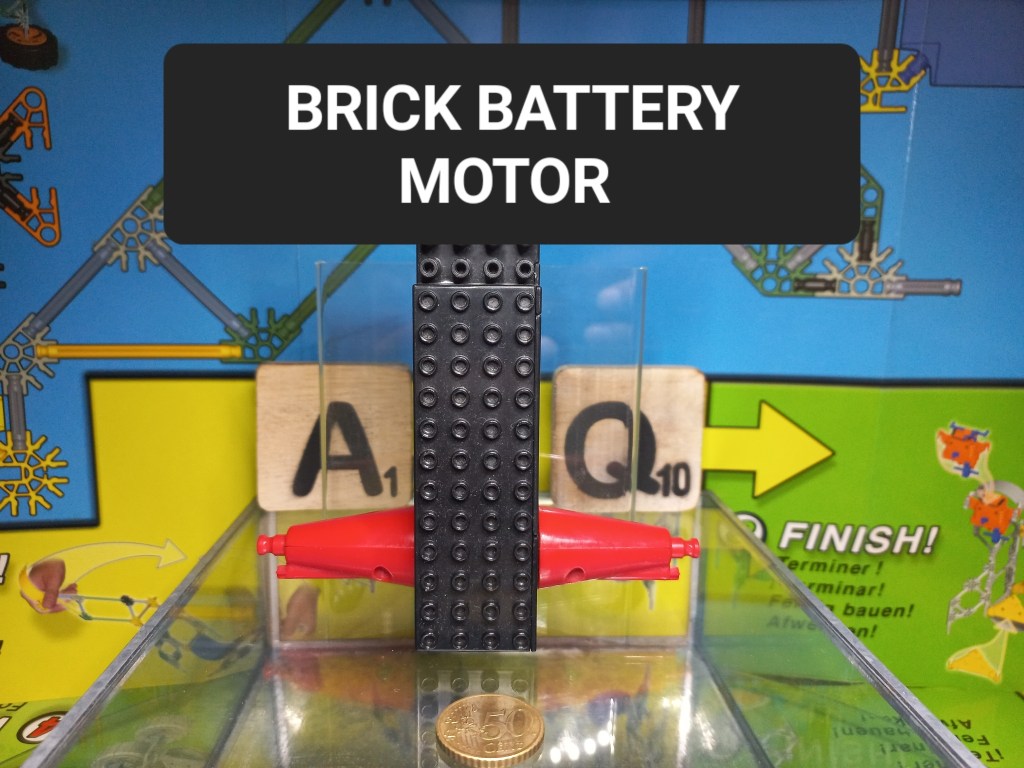
Brick K’NEX also has dedicated motor units designed to work with the Brick K’NEX building system.
These include battery-powered motors as well as pull-back power. Their housings and connections differ from the standard Classic K’NEX motor systems and should therefore be identified separately.
The Brick battery motor is also found with replaceable or separate components, including parts of the battery holder and its cover. These smaller components can be important when identifying or completing an original motor.
Brick K’NEX motors remain part of Motors & Power because propulsion is their primary function. Their use with Brick K’NEX does not make them ordinary Brick building parts.
Spring, flywheel and pull-back power
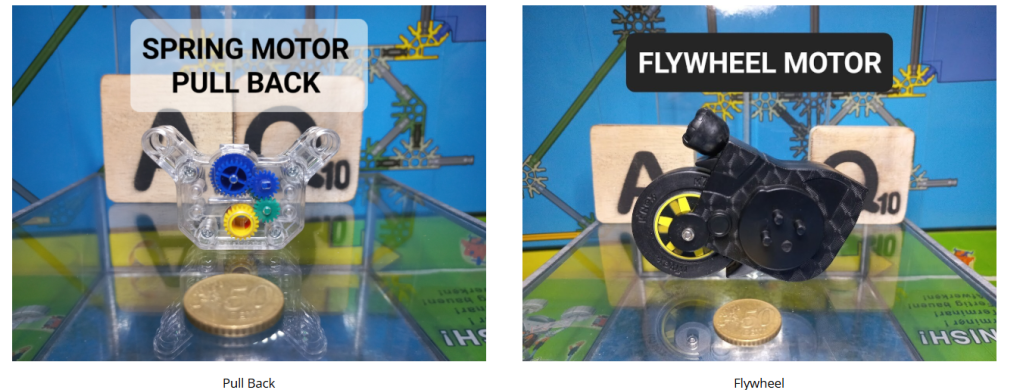
Not all K’NEX motors are electric.
K’NEX produced several forms of stored mechanical power, including:
- spring motors;
- flywheel motors;
- pull-back motors.
Each stores and releases energy in a different way. They are grouped under Motors & Power because they provide motive power to a model, but they should not be described as battery motors.
Coaster launchers and boosters
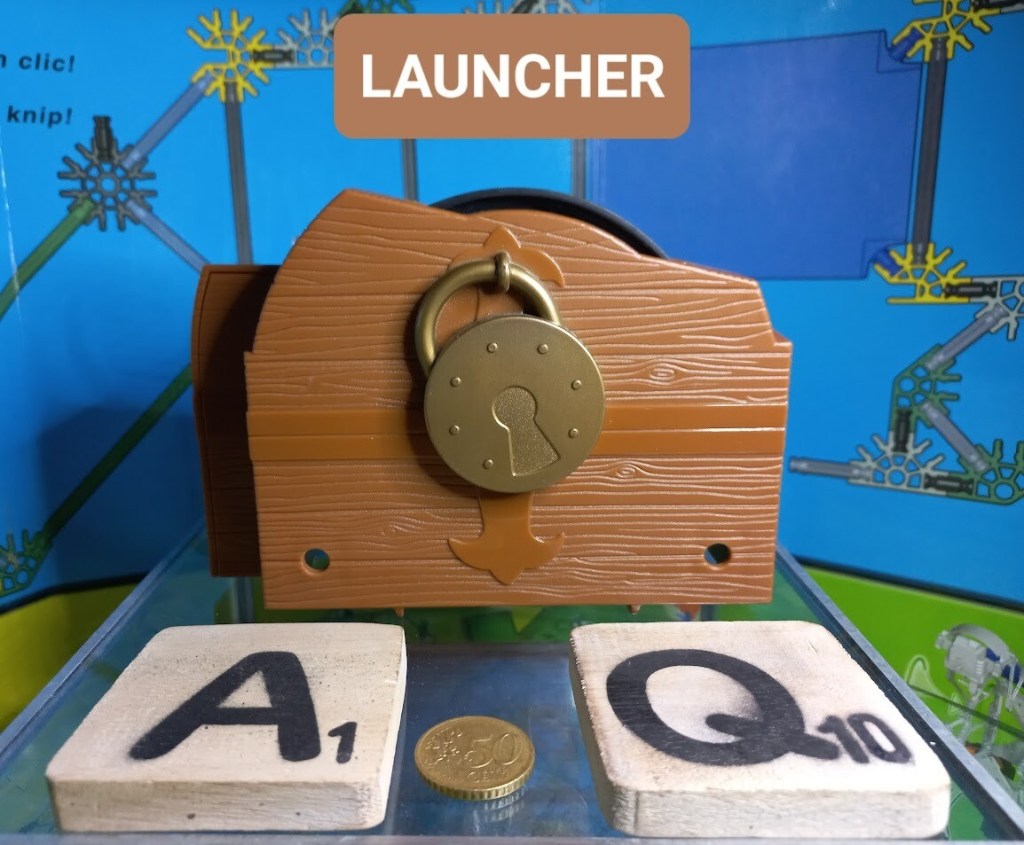
Some roller coasters use a specialised powered launcher or booster instead of, or in addition to, a conventional chain lift.
Examples include Micro K’NEX motorized launchers and larger coaster boosters.
Micro motorized launchers occur for different generations of Micro coaster track. In particular, versions exist for:
- slot/no-pin track;
- pin-jointed track.
The track connection is important when identifying a loose launcher because the two Micro coaster track systems use different connections.
Coaster cars and track remain part of K’NEX Rides & Attractions. The powered mechanism is covered here because its primary function is to provide propulsion.
Mechanical launchers
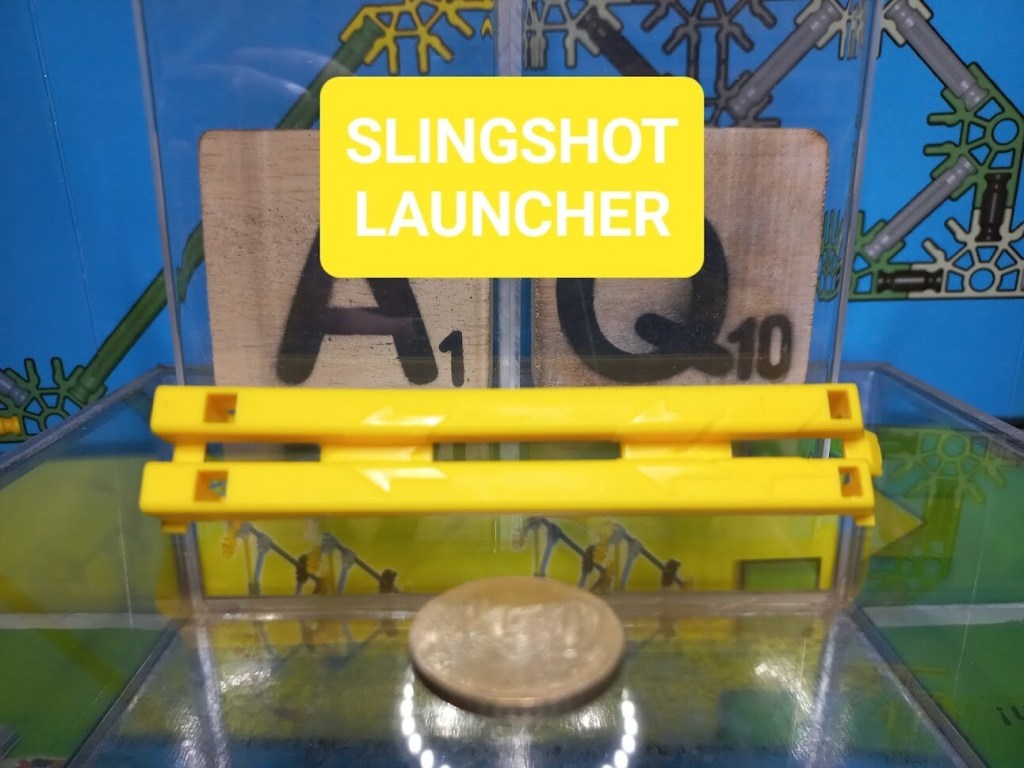
The word launcher does not always mean an electric motor.
K’NEX also used mechanical launching systems, including Slingshot Launchers. These release stored mechanical energy rather than using an electric motor.
Other specialised launch systems use different principles again.
For this reason, launchers are identified by how they provide power, rather than being treated as a single type of motor.
Specialised ride and ball-machine power
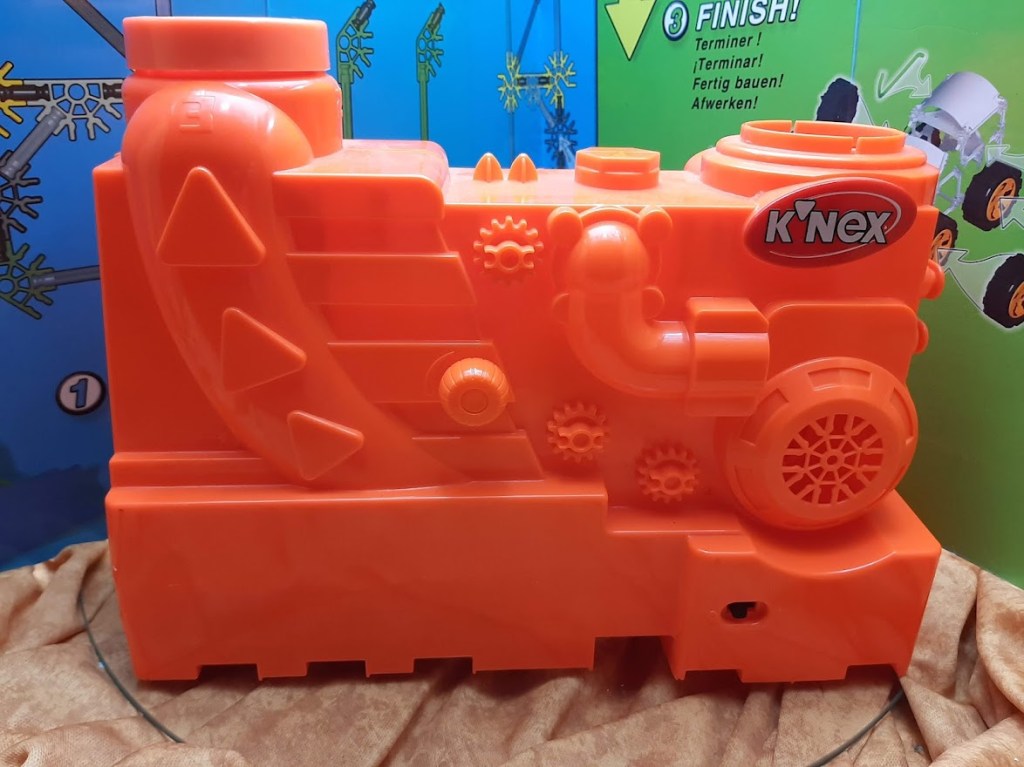
Some attractions and ball machines use power units developed for a particular mechanism.
Examples include dedicated drives for amusement rides, powered selectors and air-powered ball-machine mechanisms.
These parts may have been designed for one particular set or type of model, but their power function can make them useful for identifying how the original mechanism operated.
The rest of the attraction or ball machine is not duplicated here. Its ordinary rods, connectors, gears, track, balls and other components remain within their appropriate K’NEX families.
Controllers and special power systems
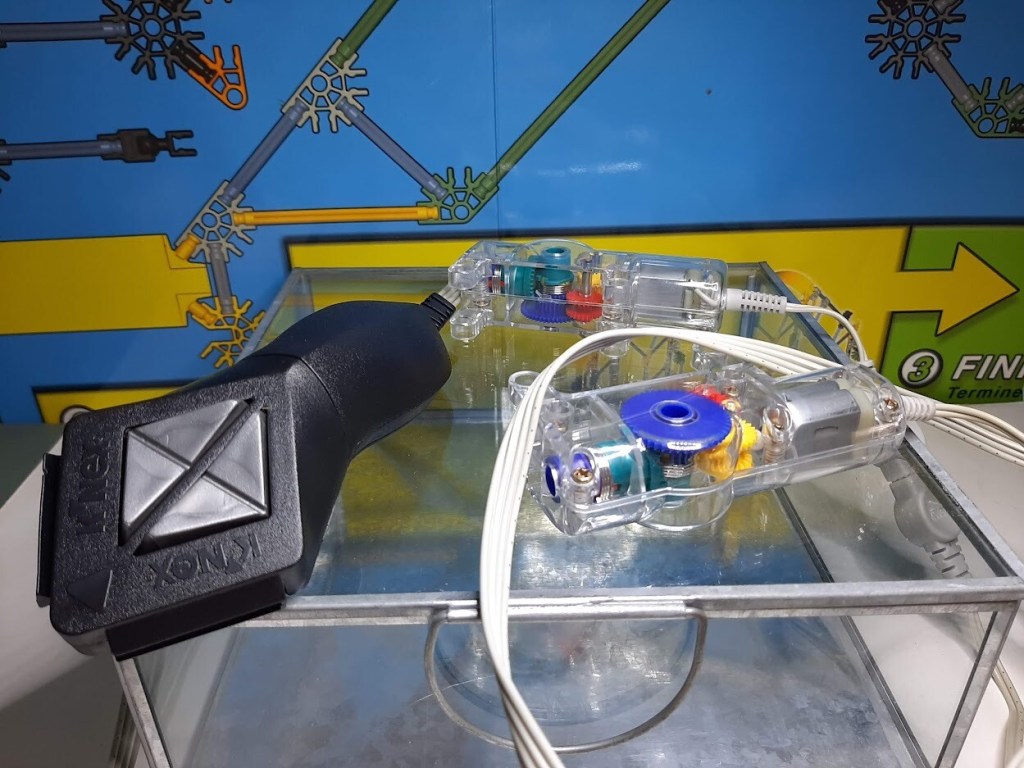
Some K’NEX systems use additional control equipment rather than a simple on/off switch.
These can include separate controller packs, battery packs or other dedicated electrical components. Such parts should be identified together with the motor system for which they were designed.
A controller or battery pack is not itself a motor, but it may be an essential part of the complete power system.
Motor parts & accessories
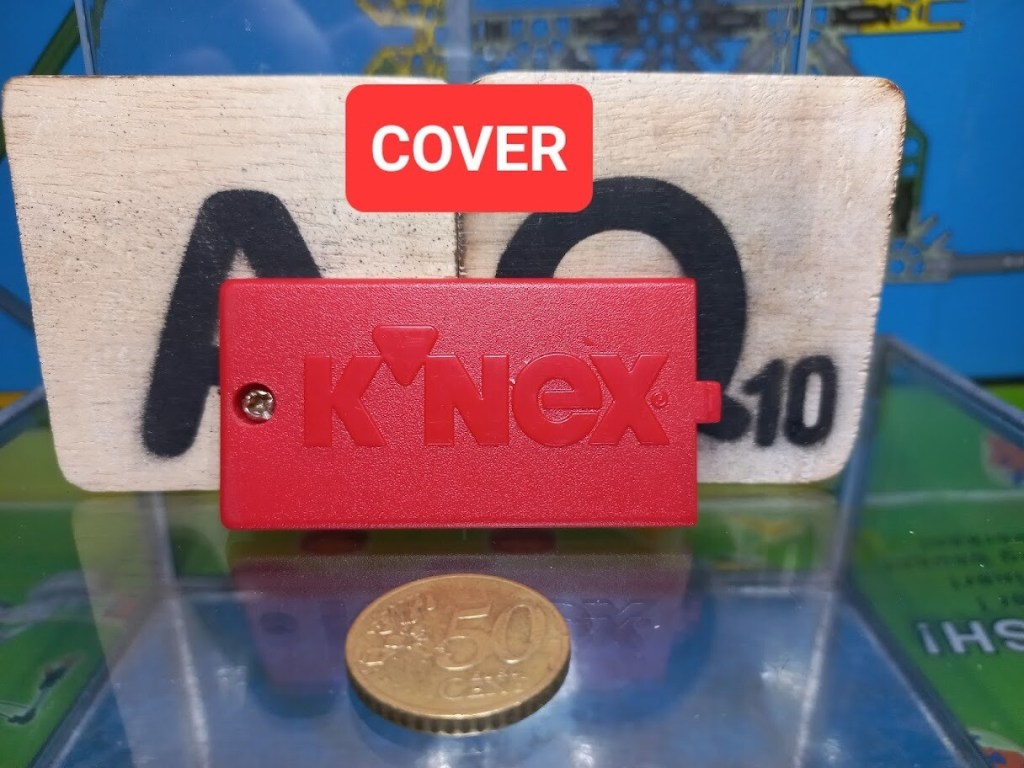
Complete motors are only part of the story.
K’NEXCHANGE also identifies loose components associated with particular motor systems, where these can be reliably distinguished. These can include:
- battery holders;
- battery covers and doors;
- front and rear motor covers;
- switches and switch buttons;
- leads and cables;
- shafts;
- gears;
- adapters;
- controllers;
- other replaceable or repair-related parts.
These smaller parts are especially useful when completing or repairing an older motor.
A cover, battery holder or switch should remain associated with the motor system it was designed for rather than being treated as a separate type of K’NEX motor.
Identifying a K’NEX motor or power unit
When identifying an unfamiliar unit, look at more than its colour or general shape. Useful characteristics include the part number, power source, battery arrangement, speed, lead or connector, output shaft, switch arrangement and any set-specific mounting or track connection.
Small differences can identify a different generation or application.
K’NEXCHANGE records these distinctions where sufficient information is available, while avoiding duplicate entries merely because the same motor was used in several different sets.
| Part number | Type | Speed / power | Identification / notes |
|---|---|---|---|
| 92401 | Battery motor | 48 / 240 rpm | Grey, early 2-speed motor |
| 23891 | Battery motor | 22 rpm | Black, slow |
| 92840 | Battery motor | 34 rpm | Blue, medium speed |
| 22722 | Battery motor | 45 rpm | Green, medium speed |
| 20861 | Battery motor | 190 rpm | Silver-grey, high speed |
| 2971001 | Battery motor | 190 rpm | Red, high speed |
| 92875 | Lead motor | approx. 36 rpm | Red; separate battery holder; long lead / tethered |
| 92880 | Lead motor | approx. 36 rpm | Red; separate battery holder; short lead |
| 20554 | Lead motor | approx. 36 rpm | Grey; separate battery holder; short lead |
| 3278001 family | 2-part motor | Variant-dependent | Separate motor and battery box; several variants |
| 92815 | 12V motor | 12V external power | Mains-powered system; not a battery motor |
| 92660 | Solar motor | Solar powered | Motor occurs with and without shaft; shaft also found separately |
| 92890 | Spring motor | Mechanical | Stores energy in a spring |
| 99238 | Flywheel motor | Mechanical | Flywheel drive with cord |
| 99133 series | Brick battery motor | Battery powered | Brick-specific housing and axle variants |
| 99205 | Brick pull-back motor | Mechanical | Pull-back drive |
| 92755 | Controlled motor system | Electrical | Two motors with separate controller pack |
| 99164 | Micro motorized launcher | Motorized | Red; versions for slot/no-pin and pin-jointed coaster track |
| 3310071 | Micro motorized launcher | High speed | Yellow Micro launcher |
| 92854 | Turbo launcher / booster | Motorized | Large Orange Turbo Launcher; coaster booster |
| 99890 | Micro Slingshot Launcher | Mechanical | Known in yellow and green; not an electric motor |
| 3195001 | Stomp Rocket Launcher Assembly | Non-electric | Separate launcher principle |
| 99044 | Specialised ride drive | Powered | Pirate Ship drive / launcher |
| 99056 | Motorized Ramp Selector | Motorized | Used in Corkscrew Canyon |
| 99075 | Air Motor | Air powered | Used in Big Air Ball Tower |
| 99908 / 99909 / 99910 | Motor covers | — | Separate coloured battery-motor covers |
| 92880/10 | Motor cover | — | Separate component for 92880 |
| 92880/11 | Rear cover | — | Separate component for 92880 |
| 92880/13 | Switch button | — | Separate component for 92880 |
| 99133R/B-3 | Battery-holder cover | — | Separate component for Brick battery motor |
| 92815EU | Mains adapter | 12V system | European adapter for 92815 |
| 90983 | Motor gear | — | White gear associated with the 12V motor system |
 K'NEXCHANGE