K’NEX sets bring together a selection of parts and one or more models that can be built from them. A set may contain familiar rods and connectors, but it can also include wheels, gears, motors, track, figures or specialised components designed for a particular type of model.
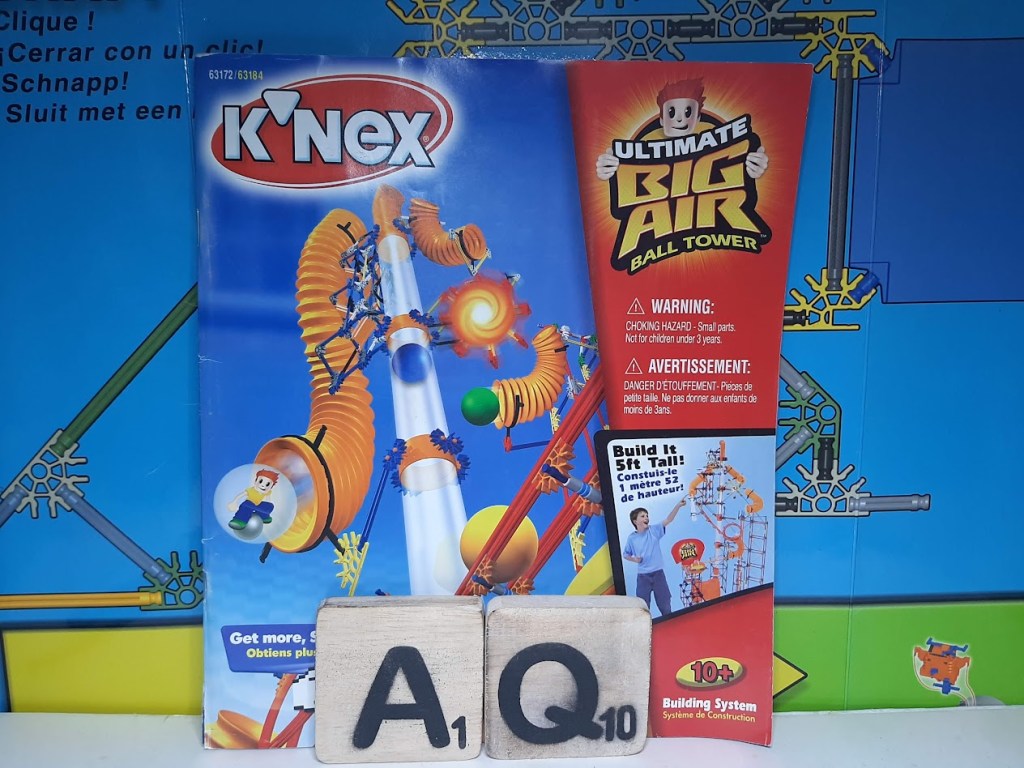
Sets range from relatively simple building sets to large constructions with thousands of pieces and complex moving mechanisms. Understanding how sets are identified and organised can help when choosing a model to build, finding instructions or reconstructing an older set.
From a box of parts to a model
A K’NEX set is more than a collection of individual parts. The components have been selected so that one or more intended models can be constructed from them.
Some sets focus on a single main model. Others provide instructions for several different models, while more open-ended building sets encourage builders to use the same collection of parts in many ways.
This illustrates an important distinction: the set is the product containing the parts, while a model is something that can be built with those parts.
Set, model and series
The words set, model and series describe different things.
A set is a particular K’NEX product, usually identified by a set number and supplied with a defined selection of components.
A model is a construction. One set may provide instructions for one model, several alternative models or many smaller constructions.
A series or product line brings together related sets. Sets in a series may share a theme, style, construction method or group of specialised components.
Keeping these terms separate makes it easier to identify older K’NEX products and understand how different releases are related.
Set numbers
The set number is one of the most useful pieces of information when identifying a K’NEX set.
Names are useful, but names alone are not always sufficient. Similar names can be used for related products, and packaging or descriptions may differ between markets and releases. A set number provides a more precise starting point for finding the correct instructions and other information.
If you have an unidentified K’NEX box, instruction book or group of parts, look for a printed set or product number before relying only on the product name.
Building instructions
Building instructions show much more than the sequence of construction steps. They can also help identify the set, its intended models and the way specialised components are used.
For older or incomplete sets, the original instructions are therefore an important source of evidence.
Instructions can also reveal that parts from different K’NEX systems were deliberately used together. A model containing Micro K’NEX components, for example, is not necessarily a completely Micro K’NEX set.
When reconstructing a set, use instructions intended for the correct set number whenever possible.
Parts and inventories
A set inventory records the components that belong to a set. Depending on the available source, an inventory may include part types, quantities, colours and particular variants.
This information has several uses. It can help determine whether a set is complete, identify an unfamiliar component or show which colour or version of a part was originally supplied with a particular set.
Inventories are particularly useful for large models. A complex construction may use many examples of the same common rod or connector while requiring only one or two specialised components.
For this reason, both quantity and identity matter. Having the correct total number of pieces does not necessarily mean that all the correct pieces are present.
Classic, Micro and Kid K’NEX sets
K’NEX sets can use Classic, Micro or Kid K’NEX components.
Classic K’NEX is the standard-size system and appears in a very wide range of building sets. Micro K’NEX uses smaller components and has been used extensively for compact structures and roller-coaster designs. Kid K’NEX uses much larger components designed for younger builders.
These categories are useful, but they should not always be treated as completely separate worlds. Some sets deliberately combine components from more than one system.
Transition and adapter components can make such combinations possible. The parts actually used in a set and its original instructions therefore provide better evidence than judging the system from the appearance of only one component.
More pieces does not always mean more difficult
Piece count gives a useful indication of the size of a set, but it does not measure building difficulty by itself.
A large set containing many repeated structural parts can involve different challenges from a smaller model containing gears, motors, moving mechanisms or specialised track.
Other factors can affect complexity:
- the number of construction stages;
- the size and stability of the model;
- repeated structures;
- moving mechanisms;
- gears and transmissions;
- motors;
- track alignment;
- specialised components;
- and the precision required during assembly.
Age recommendations are therefore useful guidelines, but the difficulty of an individual model also depends on its design and the experience of the builder.
Motors and specialised components
Some K’NEX sets introduce mechanical or powered functions in addition to structural building.
Motors can drive wheels, gears, chains, lifts and other mechanisms. Roller-coaster sets may require specialised track, coaster cars and chain components. Other product lines have introduced figures, architectural components, brick-compatible parts or parts developed specifically for a theme.
Such components can be particularly useful when identifying an unknown set. Common rods and connectors occur in many products, but an unusual motor, panel, vehicle component or specialised part may greatly reduce the number of possible sets.
Alternative models
The picture on the front of a K’NEX box does not necessarily represent everything that can be built from the set.
Some sets include instructions for alternative models. Others provide ideas for additional constructions or encourage free building after the main model has been completed.
This is one of the characteristics of a reusable construction system: the same components can take on a different function when they are combined in another way.
A rod that forms part of a tower in one model may become part of a vehicle chassis or moving mechanism in another.
Sets with thousands of parts
At the upper end of the range, K’NEX has produced exceptionally large models.
The 6-Foot Ferris Wheel, set 89790, is a useful example. Its inventory contains thousands of individual pieces, but many of these are repeated examples of a much smaller number of part-and-colour combinations.
This demonstrates the difference between piece count and part variety. A model can contain an enormous number of pieces without containing thousands of different types of parts.
Large K’NEX models are therefore also useful demonstrations of modular construction: relatively few component families can be repeated and combined to create a structure far larger than the individual pieces.
Different editions and variants
Older construction sets can sometimes be found in more than one packaging style or release.
Care is needed when comparing these. A familiar set name or similar box image does not automatically prove that two products have exactly the same inventory.
Differences may involve packaging, instructions, colours, individual components or other details. When an exact distinction matters, compare the set number, instructions and inventory rather than assuming that visually similar releases are identical.
Identifying an unknown K’NEX set
When the original packaging is missing, identifying a collection of K’NEX parts can become a small investigation.
A useful sequence is:
- Look for a set number on instructions, labels or remaining packaging.
- Identify the K’NEX system — Classic, Micro, Kid or a combination.
- Look for unusual parts such as motors, track, coaster cars, figures, panels or specialised components.
- Look for instructions or fragments of an instruction book.
- Compare the parts with a known inventory where one is available.
- Check quantities and variants, not only the general types of parts.
- Compare possible sets with reliable photographs and documentation.
Common rods and connectors may provide only limited clues. Specialised components often provide much stronger evidence.
Reconstructing an incomplete set
Identifying the set is only the beginning when a set is incomplete.
Start with the correct set number and instructions. A reliable inventory can then be used to compare the required components with the parts that are actually present.
Work from general to specific. First determine which families of parts are missing. Then compare sizes, quantities, colours and variants.
Pay particular attention to specialised components. Replacing a missing standard rod may be straightforward, while a particular gear, motor, coaster component or themed part may be essential for the intended model to function.
This process also shows why accurate information about individual K’NEX parts matters. Understanding the parts makes it easier to understand the set, while information from sets can in turn help identify and verify individual parts.
Exploring K’NEX sets
A K’NEX set can therefore be studied at several levels.
A beginning builder may simply want to know what can be built from the box. A more experienced builder may investigate the mechanisms and alternative constructions. A collector may want to identify the exact release and determine whether its inventory is complete.
In each case, the same basic information becomes useful: set number, instructions, models, systems, parts and inventory.
Together, these turn a box of K’NEX pieces into an identifiable construction set — and provide a starting point for understanding how that set fits into the wider K’NEX building system.
 K'NEXCHANGE