K’NEX Rides & Attractions
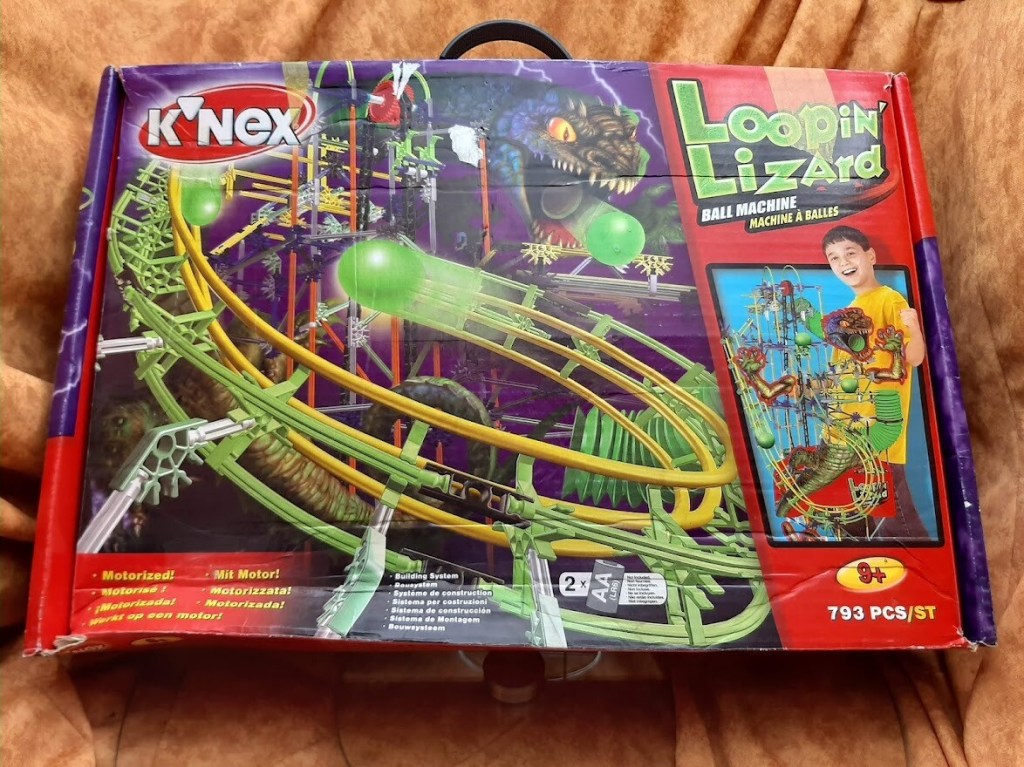
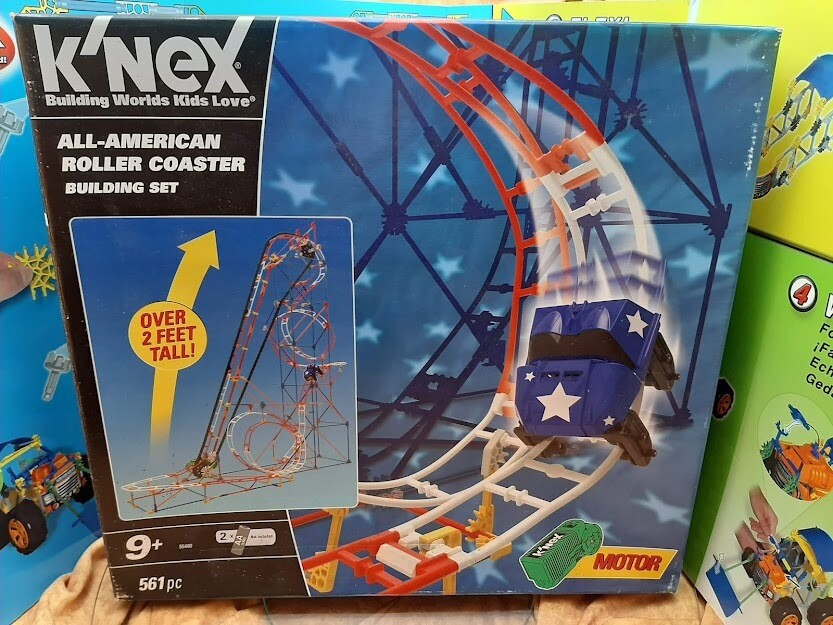
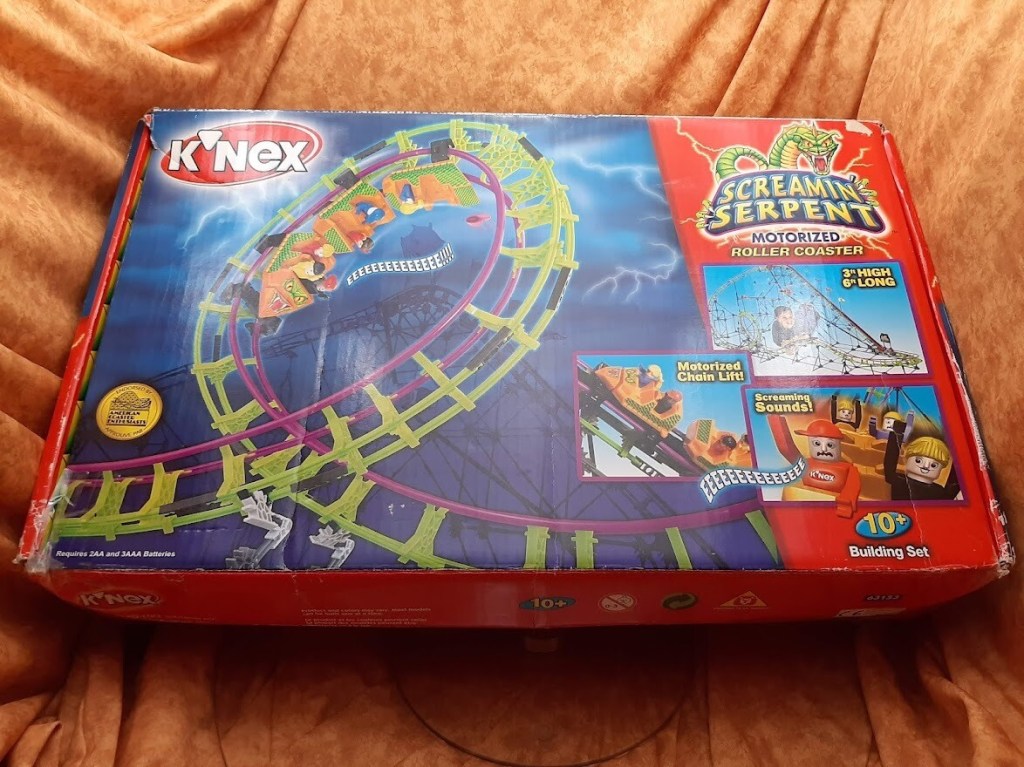
K’NEX has been used to build many kinds of moving rides and attractions, from roller coasters and Ferris wheels to fairground rides and large moving models.
K’NEX has used names including Thrill Rides and Amusement Park for particular ranges and sets. On K’NEXCHANGE, Rides & Attractions is used as a broader descriptive category. It brings together related models without treating these historical K’NEX product names as one single series.
More than roller coasters
Roller coasters form an important part of K’NEX ride building, but they are only one type.
K’NEX ride and attraction models include roller coasters, Ferris wheels and other fairground-style rides. Related moving models, such as ball machines, can use many of the same construction and mechanical principles.
There is no single standard K’NEX attraction system. Different sets combine ordinary construction parts with specialized components according to the type of model and the period in which it was produced.
Common construction principles
Most rides begin with a supporting structure made from familiar K’NEX rods, connectors, clips and other construction parts.
Moving models can then add specialized components such as:
- coaster track and track-related parts;
- coaster cars and riders;
- balls and ball-machine components;
- gears and chain;
- motors, launchers or other drive systems;
- light and sound units;
- special-purpose parts;
- graphic panels, signs, banners, stickers and scenery.
Not every set contains all of these. A roller coaster, Ferris wheel and ball machine can therefore have very different parts even though all are moving K’NEX models.
Classic K’NEX rides
Classic K’NEX rides are based primarily on the larger traditional K’NEX rod-and-connector system.
Classic roller coasters can use long lengths of flexible track supported by a K’NEX structure. Dedicated coaster-car components, track connectors and splices were produced for these models.
Other Classic attractions use different mechanisms. Ferris wheels, for example, do not require coaster track or coaster cars but can use gears and motors to create continuous movement.
Classic ball machines can use balls, tracks, gears, chain and powered lifting mechanisms to keep balls moving through the model.
Explore: Classic K’NEX Rides & Attractions
Micro K’NEX rides
Micro K’NEX uses a substantially smaller construction system and has its own extensive range of coaster components.
Unlike the long flexible track associated with many Classic coasters, Micro K’NEX coaster systems include pre-formed track sections. These include straight track, left and right curves, semi-circular sections and pin-jointed track.
Micro K’NEX also includes numerous coaster-car designs. Depending on the set, these can include standard cars, follower cars, underhung cars, light-up cars and cars designed for different launching systems.
Propulsion can also vary. Micro coaster systems have used motorized, slingshot and air-propelled launch mechanisms.
Explore: Micro K’NEX Rides & Attractions
Classic and Micro are not always completely separate
The distinction between Classic and Micro is useful for identifying parts and understanding how a model is constructed, but not every K’NEX set belongs exclusively to one system.
Some sets combine components from more than one K’NEX system.
K’NEXCHANGE therefore classifies and describes a set from its actual contents, rather than assuming its system from the model name or theme alone.
Motors, gears, chain and sound
Mechanical and electronic components are important to many K’NEX attractions, but they are not exclusive to rides.
For this reason, motors remain documented under Motors & Power, gears and chain under Gears & Chain, and sound units under Light & Sound.
The ride pages identify where these components are used and link to the appropriate parts information.
This avoids classifying, for example, a Roller Coaster Sound Unit as a coaster-car part simply because it was supplied with a roller coaster.
Coaster cars and riders
Coaster cars are among the most recognizable specialized ride components.
Classic and Micro K’NEX use different coaster-car systems, and numerous versions were produced for particular coaster designs.
Some coaster cars were supplied with seated K’NEX riders or figures. Where a rider forms part of the recognizable original coaster configuration, K’NEXCHANGE records that relationship while still allowing the figure to be identified separately.
Graphic panels, signs and scenery
The structure and mechanism are only part of many K’NEX attractions.
Printed Graphic Panels, cardboard panels, signs, banners, stickers and other scenery can transform a mechanical construction into a recognizable themed attraction.
These pieces can be particularly important when identifying or restoring a set because they are often specific to that particular model.
For this reason, Graphic Panels are not treated simply as ordinary Classic construction panels. Where possible, they are documented with the set or attraction to which they belong.
Individual rides and sets
The Classic and Micro overview pages explain the major construction systems and specialized components.
Individual set pages can then document the actual contents of a particular attraction, including its special parts, track, cars, riders, balls, drive system, motor, sound components, Graphic Panels and other set-specific pieces.
This makes it possible to distinguish between:
the K’NEX system — how the parts work;
and
the K’NEX set — which of those parts were actually supplied for a particular model.
Related moving models
Some famous K’NEX models share many characteristics with rides without necessarily being amusement rides themselves.
Ball machines are an important example. Models such as the Big Ball Factory use structures, balls, tracks, gears and powered mechanisms to create continuous movement.
K’NEXCHANGE can therefore cross-reference these models from Rides & Attractions while retaining their more precise description as ball machines where appropriate.
 K'NEXCHANGE