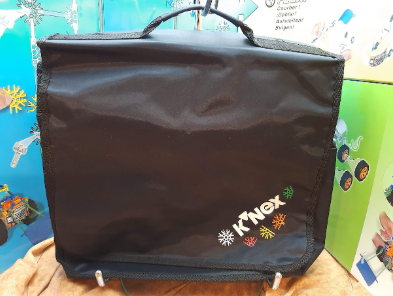
A good storage system protects K’NEX parts, keeps sets identifiable and makes building easier. The best method depends on whether the collection is used for regular building, classroom activities, set reconstruction or collecting.

Always read the original manual first and follow its instructions.
Storage requirements can differ for motors, battery-powered components, decorated parts and specialised materials.
Decide What You Want to Preserve
Before choosing boxes or sorting parts, decide what matters most.
You may want to:
- make frequently used parts easy to find;
- preserve complete sets;
- keep original colours and finishes in good condition;
- protect manuals, stickers and packaging;
- prepare parts for classroom use;
- document an incomplete or historically interesting set.
A builder may prefer to organise parts by type. A collector may prefer to keep every verified set separate. Both approaches are useful, but they serve different purposes.
Keep K’NEX Systems Separate

Classic K’NEX, Micro K’NEX and Kid K’NEX use different dimensions and connection methods.
Separating the systems makes parts easier to identify and prevents small Micro components from disappearing among larger Classic or Kid K’NEX parts.
A practical first division is:
- Classic K’NEX;
- Micro K’NEX;
- Kid K’NEX;
- motors and electrical parts;
- manuals and printed material;
- unidentified or unusual parts.
Transition parts and adapters can be stored separately or with a label explaining which systems they connect.
Organise Frequently Used Parts by Function
For a building collection, sorting by function is often more useful than sorting every colour separately.
Possible groups include:
- rods;
- connectors;
- clips and locks;
- spacers and caps;
- wheels and tyres;
- gears and chain;
- panels;
- flexible parts;
- figures and decorative parts;
- coaster track and coaster cars;
- motors and powered components;
- special-purpose parts.
Large families can then be divided further by size or shape.
For example, Classic rods can be separated by length, while connectors can be separated by their number and arrangement of connection positions.
Colour can be useful, but it should not be the only basis for identification. K’NEX has produced familiar parts in many alternative colours and finishes.
Use Compartments for Small Parts
Small clips, spacers, locks and Micro K’NEX components can easily become mixed or lost.
Compartmented trays, drawer units and boxes with removable sections can make these parts easier to find. Make sure that:
- compartments close securely;
- small parts cannot move into neighbouring sections;
- the container is strong enough for its contents;
- labels remain readable;
- the box can be carried without opening accidentally.
Avoid overfilling a compartment. Pressure from a tightly packed box can make parts difficult to remove and may place unnecessary stress on flexible or delicate components.
Keep Verified Sets Together
When the identity and contents of a set are known, consider keeping it separate from the general building collection.
Store the following information with it:
- set number;
- set name;
- production period, when known;
- instruction manual;
- parts list;
- notes about missing or replacement parts;
- any unused stickers;
- original packaging or photographs of the packaging.
Do not describe an incomplete set as complete simply because it can still build the main model. Small clips, spacers, decorative parts and alternative-model pieces may be missing.
A simple inventory note can prevent the same set from having to be researched repeatedly.
Label Storage Containers Clearly
A useful label can contain more than a general description such as “red parts”.
Depending on the collection, include:
- K’NEX system;
- part family;
- part or set number;
- colour or finish;
- quantity;
- source set;
- whether identification is confirmed;
- whether a component has been tested.
Use temporary labels for uncertain identifications. This is better than permanently assigning an unusual part to the wrong set or colour variant.
Protect Parts from Prolonged Light Exposure
Prolonged exposure to sunlight can contribute to fading, yellowing and other colour changes in plastics and colourants.
Store K’NEX away from windows and other locations with strong direct sunlight. Transparent storage boxes are useful for seeing their contents, but they do not necessarily protect parts from light.
A closed cupboard, opaque box or shaded storage area can offer additional protection.
Colour changes can also result from production differences, ageing and previous storage conditions. An unexpected shade is therefore not automatically evidence of sunlight damage.
For further background, see Why Do K’NEX Parts Sometimes Have Different Colours?.
Keep Parts Dry
Parts should be completely dry before they are placed in a closed container.
Water can remain inside:
- connector openings;
- clips;
- hollow decorative parts;
- wheel assemblies;
- mechanical housings;
- battery compartments.
Trapped moisture may cause odours or deposits and can affect metal elements accidentally stored with plastic parts.
After cleaning, allow air to circulate around the parts and check openings before closing the storage box.
Avoid Excessive Heat and Large Temperature Changes
Do not store K’NEX on a hot windowsill, close to a heater or in another location exposed to excessive heat.
Garages, sheds, vehicles and attics can experience considerable temperature and moisture changes. These conditions may be unsuitable for manuals, cardboard boxes, stickers, batteries and some specialised components.
K’NEXCHANGE does not specify a universal storage temperature because materials and products differ. A stable, dry indoor environment is a cautious general choice.
Remove Batteries Before Storage
Official K’NEX and Basic Fun instructions state that batteries should be removed when a powered toy will not be used for a long period.
Before storing a motor or battery holder:
- switch it off;
- remove all batteries;
- inspect the battery compartment;
- check for residue or corrosion;
- keep the component dry;
- store its manual or identification with it.
Do not store loose batteries inside a box of K’NEX parts. Metal components may contact the battery terminals, while an unnoticed leaking battery can damage surrounding pieces.
View the original Basic Fun K’NEX Motorized Models manual (PDF)
Store Motors and Electrical Parts Separately
Motors, lights, switches, wires and controllers should be kept separate from ordinary loose parts.
This makes it easier to:
- prevent damaged wires from becoming tangled;
- keep moisture away from electrical components;
- record whether a motor has been tested;
- retain the correct battery cover or controller;
- match a component to its original set;
- avoid mistaking an untested item for a working one.
Label an electrical component as untested when its condition is unknown. Do not assume that long-stored equipment is ready to use.
Protect Manuals and Printed Material
Instruction manuals, parts lists, decals and cardboard packaging require different storage from plastic building parts.
Keep printed material:
- dry;
- flat or properly supported;
- away from direct sunlight;
- separate from leaking batteries;
- away from dirty or damp parts;
- in a sleeve or folder where appropriate.
Do not place a heavy box of parts directly on a fragile manual. Folded pages, loose covers and older paper can be damaged by pressure and repeated handling.
If the original manual is already fragile, a digital reference copy can be used during building while the original is stored safely.
Be Careful with Rubber and Flexible Components
Tyres, bands, string, flexible tubes and similar components should not be left stretched or compressed for long periods.
Remove tension from elastic or flexible parts before storing a model or dismantled set. Keep them away from sharp edges and separate any component that has become sticky, brittle, cracked or permanently deformed.
Different materials can age differently. Inspect flexible components before returning them to a working model.
Support Large Assembled Models
A completed model can sometimes remain assembled, but long-term display introduces other risks.
Check that:
- the base is stable;
- long sections are adequately supported;
- rods are not held under unnecessary bending stress;
- tyres or flexible parts are not permanently compressed;
- motors are switched off and contain no batteries;
- the model is protected from dust and direct sunlight.
Large towers, rides and roller coasters may gradually move out of alignment. Periodically check supports, axles and track transitions.
Keep an Unidentified-Parts Box
Do not force every unusual part into an existing category.
A separate box for unidentified components is useful when:
- the part number is unknown;
- the colour may be unusual;
- the original set has not been established;
- two similar parts have important detail differences;
- a component may belong to another construction system.
Add a short note about where the part came from. Context can later help establish its identity.
Review the Collection Occasionally
Storage is not a one-time task.
Occasionally check for:
- leaking batteries;
- moisture;
- damaged containers;
- fading caused by changing light conditions;
- cracked or deformed parts;
- labels that are no longer readable;
- manuals stored under pressure;
- loose parts that have moved between compartments.
A short periodic inspection can prevent a small problem from affecting an entire box or set.
Sources and Further Reading
Basic Fun!, K’NEX Motorized Models Building Set 85043, instruction manual.
The official manual instructs users to remove all batteries when the toy will not be used for a long period. It also says to keep components free of dust and not to immerse or use them in water.
View the original Basic Fun K’NEX manual (PDF)
K’NEX User Group, Storage of K’NEX Sets and Parts.
This independent practical resource discusses original K’NEX tubs, robust cardboard boxes, compartmented storage trays and tray inserts.
Read Storage of K’NEX Sets and Parts
The organisational and preservation recommendations elsewhere in this article are practical guidance from K’NEXCHANGE. They should not be interpreted as universal manufacturer instructions.
Leave a Reply